Unmatched Prices in India with Exceptional Support. Call for assistance@ 91-9716612765

Dry Mouth While Using CPAP? Here’s the Solution
Experiencing dry mouth while using CPAP? Learn the causes, symptoms, and best solutions including humidifiers, mask adjustments, and hydration tips for comfortable sleep apnea therapy.ost description.
CPAP & BIPAP Hub
5/9/20263 min read
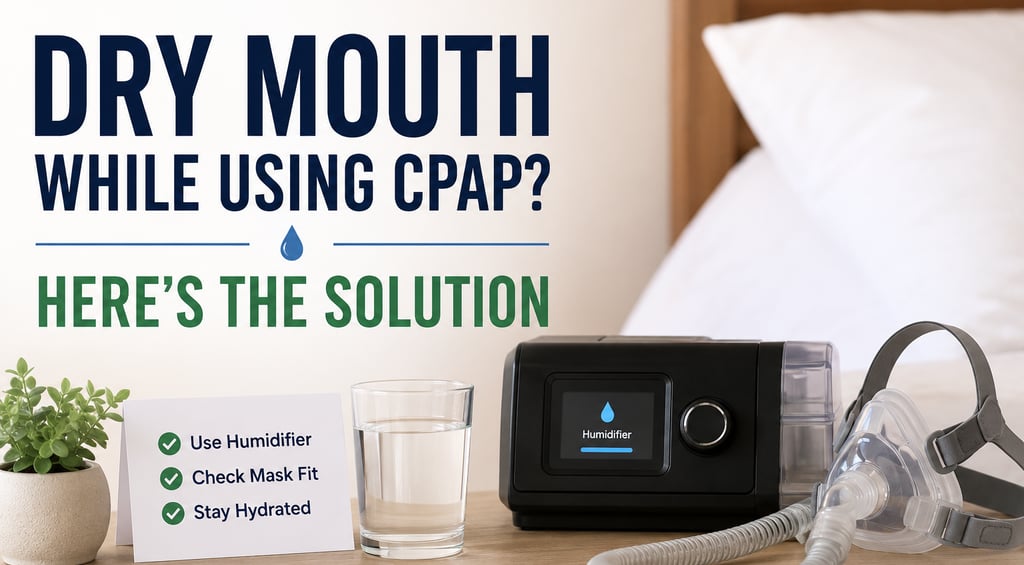
Dry Mouth While Using CPAP? Here’s the Solution
Continuous Positive Airway Pressure (CPAP) therapy is one of the most effective treatments for sleep apnea. However, many users experience a common side effect — dry mouth while using CPAP. Waking up with a dry throat, sticky mouth, or irritated tongue can make CPAP therapy uncomfortable and may even discourage regular usage.
The good news is that dry mouth caused by CPAP is usually easy to manage with the right adjustments and accessories.
Why Does CPAP Cause Dry Mouth?
Dry mouth during CPAP therapy mainly occurs when airflow dries out the moisture inside the mouth and throat. This usually happens due to:
1. Mouth Breathing During Sleep
If you sleep with your mouth open while using a nasal CPAP mask, the pressurized air escapes through the mouth, leading to dryness.
2. Low Humidity Settings
Many CPAP machines include a humidifier. If the humidity level is too low, the airflow can feel dry and irritating.
3. Mask Leaks
An ill-fitting CPAP mask may leak air around the mouth or nose, increasing dryness and reducing therapy effectiveness.
4. Dehydration
Not drinking enough water during the day can worsen dryness during CPAP therapy.
5. Certain Medications
Some medicines for allergies, blood pressure, anxiety, or depression may reduce saliva production and increase dry mouth symptoms.
Common Symptoms of CPAP Dry Mouth
You may experience:
Dry or sticky feeling in the mouth
Sore throat in the morning
Cracked lips
Bad breath
Difficulty swallowing
Burning sensation on the tongue
Frequent waking during sleep
If these symptoms occur regularly, your CPAP setup may need adjustment.
Effective Solutions for Dry Mouth While Using CPAP
1. Use a Heated Humidifier
A heated humidifier adds moisture to the airflow coming from the CPAP machine. This is one of the most effective ways to reduce dryness.
Benefits:
Keeps throat and mouth moist
Improves comfort during therapy
Reduces nasal irritation
Helps improve CPAP compliance
Most modern CPAP machines come with built-in humidifiers. Increasing the humidity level slightly can make a major difference.
2. Try a Full Face CPAP Mask
If you breathe through your mouth while sleeping, switching from a nasal mask to a full-face mask may help.
A full-face mask covers both the nose and mouth, ensuring proper airflow without excessive air leakage.
Best for:
Mouth breathers
Nasal blockage patients
Users experiencing frequent dry mouth
3. Use a Chin Strap
A chin strap gently keeps the mouth closed during sleep, encouraging nasal breathing.
This simple accessory can significantly reduce mouth leaks and improve therapy comfort when using nasal masks.
4. Check for Mask Leaks
Even a small leak can cause dryness and reduce CPAP effectiveness.
Tips:
Adjust mask straps properly
Replace worn-out cushions
Choose the correct mask size
Clean the mask regularly
A properly fitted mask improves both comfort and sleep quality.
5. Stay Hydrated
Drink enough water throughout the day to maintain proper hydration.
Avoid before bedtime:
Alcohol
Excess caffeine
Smoking
These can worsen dry mouth symptoms.
6. Use CPAP-Friendly Moisturizing Products
Special oral moisturizers or dry mouth sprays may provide temporary relief.
Sugar-free lozenges and mouth gels can also help stimulate saliva production.
Can Dry Mouth Affect CPAP Therapy?
Yes. Ignoring dry mouth may lead to:
Poor sleep quality
CPAP discomfort
Reduced therapy compliance
Increased risk of cavities and gum disease
Interrupted breathing therapy
That’s why it’s important to address the issue early rather than stopping CPAP usage.
When Should You Contact a Sleep Specialist?
You should consult a CPAP provider or sleep specialist if:
Dry mouth persists despite humidifier use
You experience severe throat pain
CPAP mask feels uncomfortable
Therapy is becoming difficult to continue
You suspect pressure settings need adjustment
Professional guidance can help optimize your therapy settings and improve comfort.
Final Thoughts
Dry mouth while using CPAP is common, but it should not stop you from getting effective sleep apnea treatment. Small adjustments like using a humidifier, correcting mask leaks, changing masks, or improving hydration can dramatically improve comfort.
Consistent CPAP therapy helps improve sleep quality, energy levels, breathing, heart health, and overall well-being. If dryness continues, speak with your CPAP provider to find the best solution tailored to your needs.
Medical Disclaimer:
This website does not provide medical advice. All content, including text, graphics, images, and other material, is for informational purposes only and should not be considered medical advice, diagnosis, or treatment.
Products
Providing CPAP, BiPAP, and oxygen solutions online.
Support
Contact us
cpapandbipaphub@gmail.com
+91-9716612765, +91-9910320322
© 2024. All rights reserved.