Unmatched Prices in India with Exceptional Support. Call for assistance@ 91-9716612765

Sleep Study Test: Everything You Need to Know for Better Sleep
A good night’s sleep is essential for your overall health, yet millions of people struggle with undiagnosed sleep disorders. If you often feel tired, snore loudly, or wake up frequently at night, a sleep study test could be the key to understanding what’s going wrong.
4/28/20261 min read
Sleep Study Test: Everything You Need to Know for Better Sleep
A sleep study test is one of the most effective ways to diagnose sleep-related problems like sleep apnea and other sleep disorders. If you experience constant fatigue, loud snoring, or disturbed sleep, a polysomnography test can help identify the issue and guide proper treatment.
What is a Sleep Study Test?
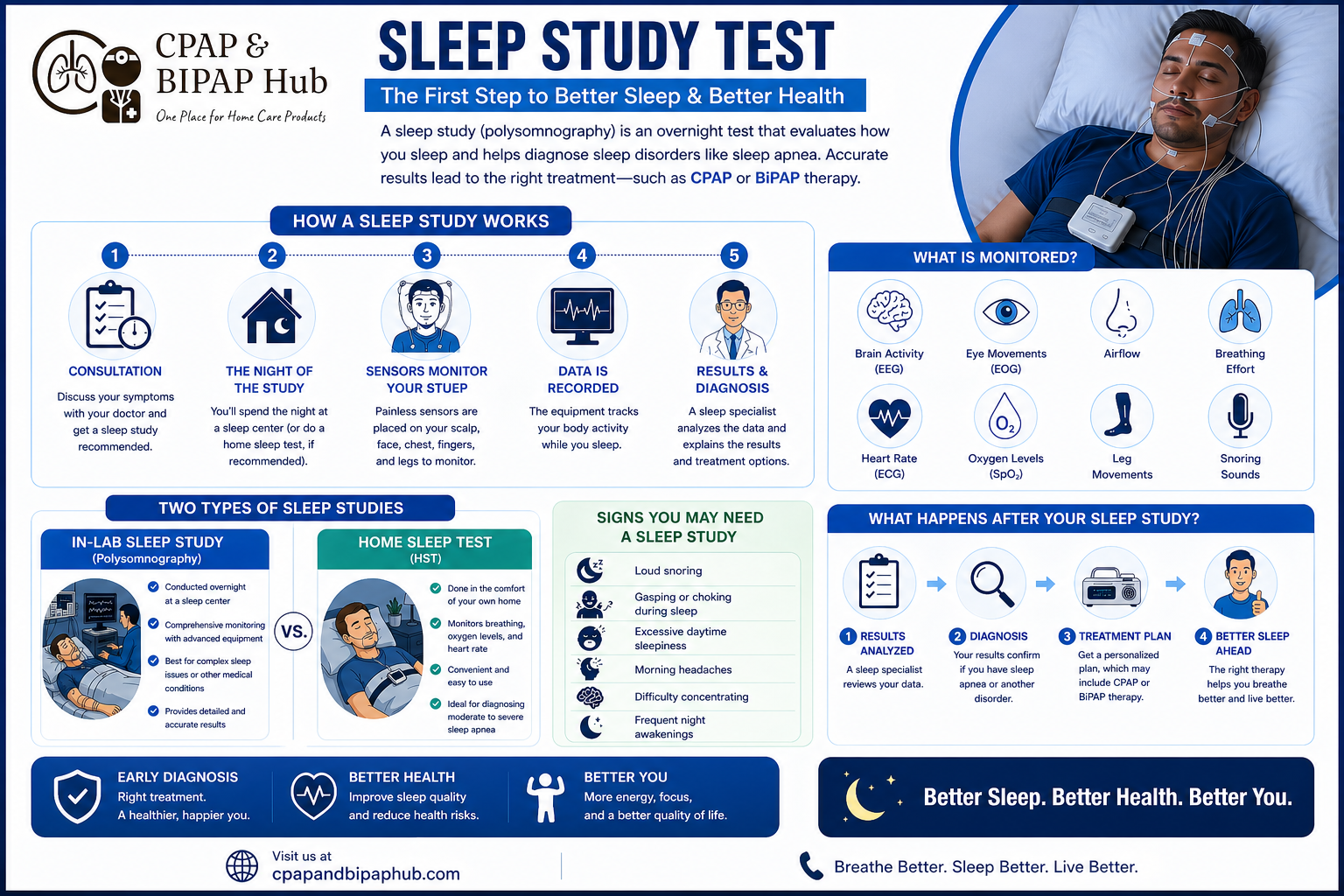
A sleep study, also known as polysomnography, is a non-invasive overnight test that monitors your body while you sleep. It is widely used for sleep apnea diagnosis and evaluating other sleep disorders.
Why is a Sleep Study Important?
Untreated sleep disorders can lead to serious health complications such as:
High blood pressure
Heart disease
Diabetes
Daytime fatigue
A proper sleep disorder treatment plan often includes CPAP therapy or BiPAP therapy, depending on the severity of the condition.
Types of Sleep Study Tests
1. In-Lab Sleep Study (Polysomnography)
This is conducted in a hospital or sleep center with advanced monitoring.
Best for:
Severe sleep apnea
Complex medical conditions
2. Home Sleep Test (HST)
A sleep test at home is a convenient option using portable devices.
Best for:
Mild to moderate sleep apnea
Patients looking for affordable testing in India
What Happens During a Sleep Study?
During the test, sensors monitor:
Brain activity (EEG)
Eye movement
Heart rate
Oxygen levels (SpO₂)
Breathing patterns
Body movements
This helps in accurate sleep apnea diagnosis and selecting the right treatment.
Signs You May Need a Sleep Study
Consider a sleep study test if you have:
Loud snoring
Gasping during sleep
Excessive daytime sleepiness
Morning headaches
Poor concentration
What Happens After the Sleep Study?
After the test:
Data is analyzed
Diagnosis is confirmed
Treatment is recommended
Therapy begins (CPAP or BiPAP)
Benefits of Sleep Study
Early diagnosis of sleep disorders
Better sleep quality
Improved energy levels
Reduced health risks
Get the Right Sleep Solution
If you're searching for a sleep study near me or looking for trusted CPAP/BiPAP solutions in India, early testing is the first step toward better health.
At cpapandbipaphub.com, we provide complete support—from sleep testing guidance to selecting the best CPAP and BiPAP machines.
Medical Disclaimer:
This website does not provide medical advice. All content, including text, graphics, images, and other material, is for informational purposes only and should not be considered medical advice, diagnosis, or treatment.
Products
Providing CPAP, BiPAP, and oxygen solutions online.
Support
Contact us
cpapandbipaphub@gmail.com
+91-9716612765, +91-9910320322
© 2024. All rights reserved.